


Integrity governance

Compliance Management

Ventec operates in strict accordance with applicable laws and regulations spanning environmental protection, labor rights, product safety, occupational health and safety, financial disclosure, and corporate governance. The Company has established compliance, audit, and internal-control mechanisms to continuously monitor implementation by each operating unit and ensure that business activities conform to statutory requirements and industry standards. Regulations are periodically inventoried and risk-assessed; internal policies are updated in a timely manner in response to regulatory changes. Companywide training and communications strengthen employees' compliance awareness. In 2024, there were no incidents that resulted in penalties on the Company or responsible persons, and no material fines or sanctions imposed by competent authorities— demonstrating Ventec's commitment to legal compliance and corporate responsibility

Category & Result
Human-rights regulations

No penalties for violations of human-rights regulations.

Anti-competitive behavior

No involvement in anti-competitive conduct or litigation related to antitrust/monopoly laws.

Operating-related regulations

No violations of the Company Act or securities laws; no cases of corruption; no information or personal-data leaks.

Social and environmental regulations

No penalties from local governments for violations of social or environmental regulations.

Internal Audit Mechanism

Internal Audit Organization

Ventec has an Internal Audit Office as an independent unit under the Board of Directors responsible for internal-audit functions to strengthen corporate governance and risk management. The Office consists of one Chief Audit Executive and one full-time auditor. The Chief Audit Executive reports regularly to the Audit Committee and attends Board meetings to present audit reports; when necessary, reports are also made to the Chairperson and independent directors. Appointment or dismissal of the Chief Audit Executive requires Audit Committee consent and Board approval. Recruitment, appraisal, and remuneration of audit staff are proposed by the Chief Audit Executive for approval by the Chairperson to ensure professionalism and independence.

Internal Audit Organization
Internal Audit Process
01.
Annual & project audit planning

• Audits are performed in accordance with the Board-approved annual audit plan; project audits are conducted when necessary.

• Upon completion, results are consolidated into audit reports and submitted to the Chairperson for review.

02.
Handling of findings & improvement tracking

• If internal-control deficiencies or anomalies are identified, auditors coordinate with relevant units to develop corrective measures.

• The Internal Audit Office tracks progress on a periodic basis to ensure effective remediation.

• Audit reports and improvement status are reported regularly to the Chairperson and the Audit Committee and included in Board reporting.

03.
Self-assessment & strengthening of internal controls

• Each year, the Internal Audit Office oversees self-assessments of the internal-control system by all units and subsidiaries and performs reviews thereof.

• Self-assessment results, identified deficiencies, and remediation status are consolidated to evaluate overall internal-control effectiveness.

• Outcomes are provided to the Board and the CEO as the basis for signing the Statement on Internal Control System.

Internal Audit Outcomes

In accordance with internal-control regulations, the Company conducts annual self assessments of the design and operation of controls and prepares a Statement on Internal Control System in the format prescribed by regulators. The statement is filed within four months after fiscal year-end and disclosed on the designated website, in the annual report, and in the prospectus as required. The 2024 audit results indicate that internal controls operated stably with sound mechanisms, and no material irregularities or control deficiencies were identified.

Sustainability Information Management

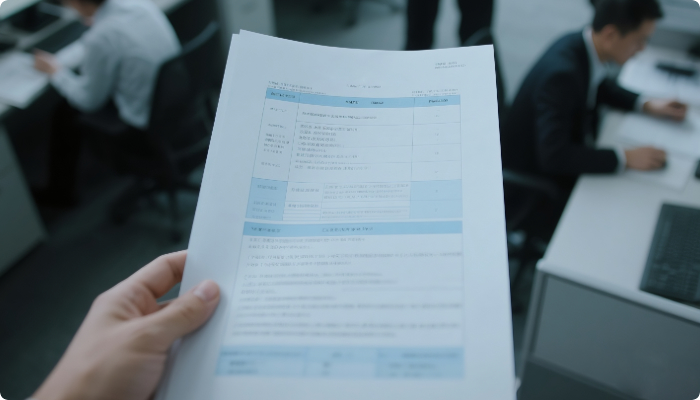
To enhance the quality of sustainability disclosures and mitigate reporting risk, the Board has approved the Sustainability Best-Practice Principles and the Sustainability Information Management Regulations. These set out the processes for collection, preparation, approval, and publication of sustainability information to ensure accuracy, completeness, and timeliness. The Administration Division coordinates implementation, integrates the procedures into the internal-control system, and undergoes periodic verification by Internal Audit to ensure effective execution and compliance with transparency requirements. Disclosures cover, among others: Board-approved policies and plans; risk-impact analyses; targets and action measures; stakeholder topics; and suppliers' environmental and social performance. Reports are prepared with reference to international standards and are planned to obtain third-party assurance to further enhance reliability.

  • Taiwan
  • Suzhou Plants
  • Shenzhen Plants
  • Jiangyin Plant
  • Germany Office
  • United Kingdom Office
  • United States Office
  • Thailand office